
By Joseph T. Ellington Jr., Licensed Residential Appraiser · Capital Valuations
“Waterfront” can hide several different valuation questions. A home may have direct frontage, a view across another parcel, shared access or a dock subject to separate rights. Those features should be identified before assigning any value contribution.
For a private residential appraisal, I need to know what the owner actually holds and what would convey under the assignment. Attractive water photographs do not prove legal access or usable boating facilities.
Begin with the rights rather than the label
Provide a survey or plat, deed information and relevant access or association agreements if available. Identify whether the dock is on the subject property, shared, separately owned or used by permission.
If access depends on an easement or agreement, the document’s terms matter. Your attorney can address enforceability and legal interpretation. A surveyor or appropriate official can address boundaries and approvals.
The Poquoson property guide distinguishes frontage, view and shared access. The same distinction matters in Virginia Beach and other Hampton Roads waterfront settings.
Describe practical utility accurately
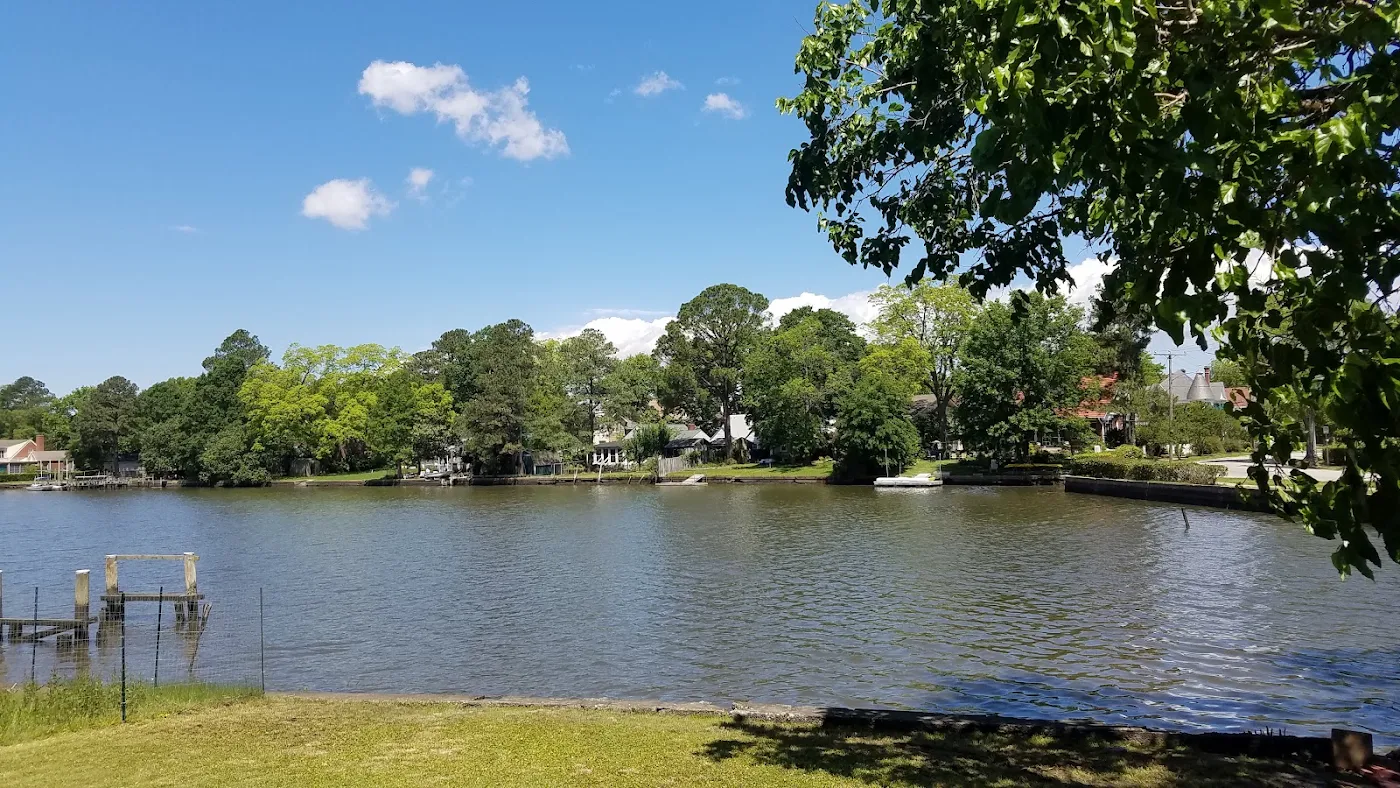
In my local appraisal work, I encounter properties described as waterfront where the water behind the home is a tidal marsh. At higher tide, an owner may be able to launch a canoe; at lower tide, that access can be very limited. That is a different benefit from usable deep-water access. Marsh conditions, including odors, can also affect the appeal to particular buyers. I investigate the actual use and market evidence rather than assume a dock or water behind the house warrants a premium.
Water depth, tidal conditions, dock condition, shoreline improvements and access can influence how buyers use a property. Do not assume that every water-related home offers the same boating opportunity.
Share relevant records and clearly identify information reported by another party. If a listing claims year-round boat access, provide the basis for that claim rather than expecting the appraiser to certify it from one visit.
A marine contractor, engineer or other qualified specialist may be needed to examine structural condition or technical feasibility. My residential value analysis does not replace a dock inspection or permission to build or repair waterfront improvements.
A waterfront document checklist with a purpose
| Frontage and boundaries | Available survey or plat identifying the subject’s relationship to the water. |
|---|---|
| Dock or access rights | Recorded or association documents describing use, sharing and transfer. |
| Practical use | Documented depth or access information, maintenance history and relevant limitations. |
| Condition and approvals | Available permits, repair records and specialist reports for shoreline structures. |
A waterfront comparison should explain the useful benefit, not just count feet of shoreline. Sheltered usable access, a broad view and a shared pier represent different features. Evidence of buyer response is more informative than a fixed percentage added to every water-related property.
Cost and waterfront contribution are different
A dock or bulkhead can be expensive without its construction cost becoming an equal addition to market value. Its condition, rights, utility and buyer demand need analysis in the context of the whole property.
Similarly, a view may contribute differently from access, and a narrow frontage may function differently from a broad usable shoreline. There is no universal Hampton Roads waterfront percentage I can apply responsibly to every house.
What I have seen with water views
In my appraisal work, I have seen a water view become blocked by construction on the property between the house and the water. That is why I look beyond the view visible on the inspection date and ask what lies between the home and the shoreline. A view across someone else’s land is different from owning waterfront. Whether a view is protected needs supporting documents; I would not assume it will remain unchanged.
Comparable sales should be researched for their own water characteristics. The comparable-sales article explains why proximity alone does not establish comparability.
Keep flood information in its own part of the file
A water-related setting may involve flood risk, but a water view and a flood-zone designation are not the same feature. Official mapping, elevation information and insurance records can provide context.
FEMA’s flood-map resources explain how to locate and read official mapping. A map is not a survey or a promise that a property will never flood. Ask the appropriate floodplain, insurance or surveying professional about your specific circumstances.
If there is actual damage, disclose it. The post-disaster appraisal guide covers a different assignment problem involving condition before or after an event.
Define the residential scope before ordering
Tell me about the home, dock and any unusual uses when you contact me. Marinas and waterfront development projects may need a specialist.
For a purchase, identify what the contract includes. If a boat or other movable equipment is part of the package, my furnished-purchase article explains the distinction between real estate and other property.
Contact me with the address, intended use, effective date and available waterfront documents. Our residential services focus on a supported opinion of the defined property, rather than a premium based on a water-related label.