
Guide revised .
If your home has been damaged by a flood, fire, hurricane, or tornado, an appraisal can help establish its value for a specific decision. The first question I want answered is what you need that value for: selling the damaged house, evaluating a repair plan, documenting a value before the event, or meeting a lender’s or local official’s requirements. Those requests can call for different work.
In this guide, I explain how I approach the valuation questions after property damage, what records a homeowner should gather, how repairs affect the analysis, and where insurance and rebuilding requirements fit. I also cover a detail that matters in Hampton Roads: a floodplain determination may concern the building’s value separately from the land.

Start here: Follow official safety instructions, contact your insurer, preserve dated records when safe, and get the requesting party’s written requirements before paying for an appraisal. Do not delay necessary emergency work just to wait for an appraiser.
An insurance claim estimate, a safety inspection, a lender’s disaster inspection, and a real estate appraisal answer different questions. Matching the service to the problem can save time and avoid buying the wrong report.
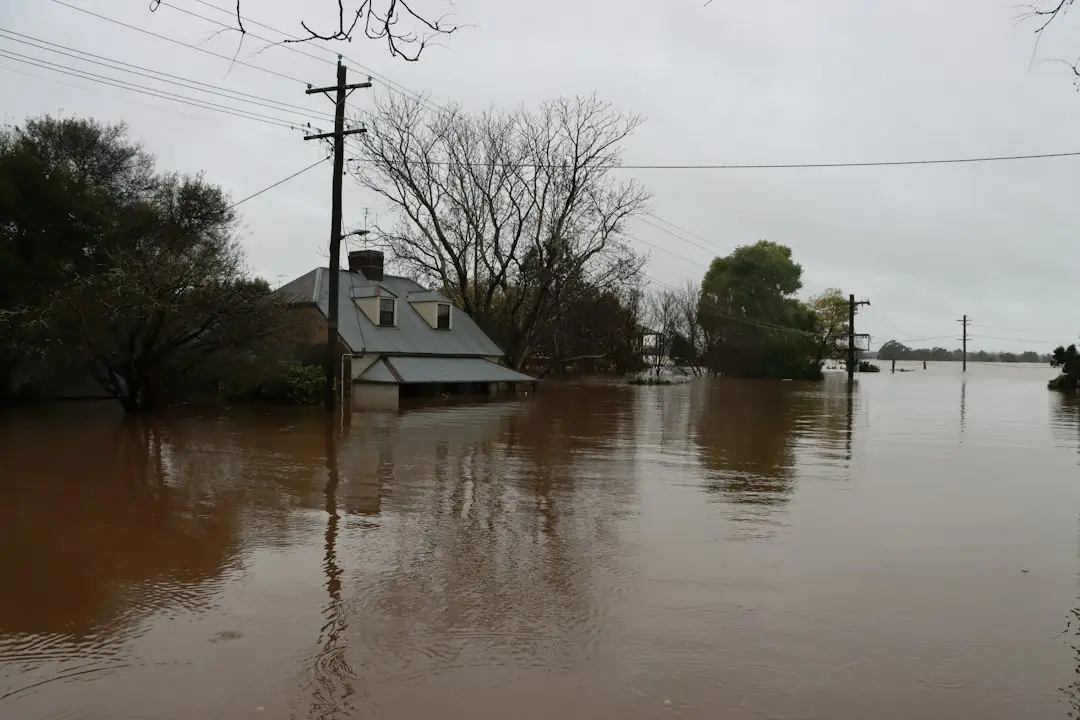
Before the disaster, damaged today, or repaired: which value do you need?
“What is my house worth now?” sounds straightforward until someone hands me a repair estimate and asks for the value before the storm. I would clarify that request before starting. The effective date is the date the value applies to. It can differ from the inspection date and the date the report is delivered.
Three valuation questions after a disaster
A past-date opinion based on the home’s condition and market at that time. Earlier photographs and records help reconstruct the property.
An as-is opinion for a stated date. The analysis considers the remaining damage, usable space, repair uncertainty, and market evidence.
An opinion under a clearly described completed-repair premise. Plans, specifications, the effective date, and necessary assumptions must be stated.
If you need a value from before the event, my retrospective appraisal service page explains that assignment. If you are comparing the damaged house with a proposed finished condition, see as-is versus as-completed appraisals. A current value assuming completed repairs is also different from a forecast of value at a future completion date.
Who should you call for each problem?
My role as a real estate appraiser is to analyze value. I can use reliable repair estimates and specialist findings in that analysis, but an appraisal is not a structural certification, a mold clearance, or an insurance coverage decision.
Match the question to the professional
Follow local officials’ instructions and obtain the appropriate qualified building or engineering evaluation.
Use qualified contractors and relevant specialists for the scope of damage, remediation, and repair estimates.
Ask the insurer or claims adjuster about coverage, deductibles, documentation, and the claim process.
Discuss the intended use, property condition, value date, and report requirements with a qualified real estate appraiser.
Be careful with the phrase “FEMA appraisal.” FEMA may arrange a home inspection to verify disaster damage for assistance. A municipality may ask for building-value evidence for floodplain compliance. A lender may need a post-disaster inspection. These are separate processes. Ask who is requesting the work and what written instructions apply; a private market-value appraisal does not itself establish eligibility for disaster assistance.
If your policy mentions an “appraisal” process for a disputed insurance loss, ask the insurer or your adviser what qualifications and procedures the policy requires. Do not assume a standard real estate appraisal is the service described in that clause. My guide to insurance replacement cost and market value explains the distinction between the numbers.
How I approach a home appraisal after disaster damage
The basic appraisal framework still applies. The additional work is establishing the relevant condition, dates, repair status, and market response. My guide to the home appraisal process covers the ordinary ordering and reporting steps; here is what deserves extra attention after a loss.
1. Establish exactly what changed
I would want a short chronology: when the event occurred, which parts of the house were affected, what emergency work followed, and what has been repaired. “The house flooded” could describe water in a crawl space, damage throughout the first floor, or an event that also affected the structure and mechanical systems. Those conditions cannot be treated as interchangeable.
A useful repair estimate identifies rooms, materials, quantities, systems, and work remaining. A single total with no explanation leaves important questions unanswered. Separate restoration of damaged items from optional upgrades you decided to add during construction.
2. Determine what can be inspected safely
Tell me before scheduling if access is restricted, utilities are disconnected, rooms are opened up, or a specialist has identified a concern. Photographs and reports can help, but they may not resolve every limitation. If an important fact cannot be established, I need to determine whether credible work is possible and whether additional information is required.
I do not diagnose hidden structural damage or decide that an electrical system is safe. The report needs to distinguish what I observed from what a qualified specialist reported and identify any material assumptions.
3. Research the market on the relevant date
I examine the alternatives buyers would have considered, including condition, location, repair needs, and the circumstances of each sale. A renovated house may provide useful context, but its sale price cannot be applied to a damaged house without analyzing the differences.
The timing of the evidence matters. A sale that closed after a hurricane may have gone under contract before it. I would investigate whether the price reflected the disaster, whether repairs were completed, and whether concessions or unusual terms affected the transaction. Sparse post-event sales call for explanation and careful judgment, not an automatic percentage deduction.
4. Separate repair spending from the effect on value
A repair estimate is useful evidence. It is not automatically the amount a buyer would subtract. Buyers may also consider the time required, access to financing, contractor availability, and uncertainty about unfinished work. Completed repairs, permits, and specialist documentation can reduce uncertainty, but the market evidence must support the value conclusion.
Hypothetical example: Suppose the evidence supports a $450,000 value under a defined repaired condition, and a contractor estimates $60,000 of remaining work. Subtracting the estimate gives $390,000, but that arithmetic alone does not establish as-is market value. I still need to examine how buyers price the damaged property and whether the estimate covers the entire problem.
Likewise, comparing a value from last year with today’s value does not isolate disaster damage if the broader market changed between those dates. These figures illustrate the reasoning; they are not a local sale or an adjustment formula.
5. Explain the conclusion and its limits
The report should make the effective date, observed or assumed condition, intended use, relevant evidence, and remaining limitations understandable. If it assumes specified repairs are complete, that premise must be clear. A value subject to repair assumptions should never be mistaken for an opinion about the house in its current damaged condition.
What to send me, where to find it, and why it matters
Start with the requesting party’s instructions and the records you already have. You do not need to obtain every item below, and missing paperwork is something to discuss, not a reason to enter an unsafe house or delay emergency repairs.
A useful first message to your appraiser
- Property address
- Who needs the report
- The decision it will support
- Required value date, if known
- Event date and type
- Rooms and systems affected
- Whether access is safe
- Any official restrictions
- What has been completed
- What remains unfinished
- Available estimates and reports
- Your actual deadline
| What to send | Where to look | What it helps establish |
|---|---|---|
| The full written request, including required date and report criteria. | The lender, attorney, insurer, or local official requesting the work. | Whether you need current market value, a past-date value, a building-only analysis, or a different service. |
| Dated photos showing the same affected rooms before and after the event, if available. Identify each room and date. | Your phone backup, earlier listing, or records held by your agent or contractor. | What was present before the damage and what changed. Old marketing photos alone do not prove current condition. |
| Every page of the repair estimate, including exclusions, allowances, and revisions. | The contractor or restoration company that prepared it. | What the estimate includes and which costs remain uncertain. The total alone is not enough. |
| A room-by-room list of completed work and work remaining, with invoices or progress photos where available. | Your contractor’s updates and your own repair records. | Which condition exists on the value date. Separate optional upgrades from restoration work. |
| Applicable permits, final inspection results, and relevant specialist reports. | The local permit office and the professionals who performed the work. | The documented status of repairs and specialist findings. An invoice by itself does not establish a final approval. |
| Any substantial-damage notice, requested valuation instructions, and existing elevation certificate. | The local floodplain or building office and your property records. | Whether a separate building-value question or rebuilding requirement needs to be addressed. |
FEMA’s FloodSmart guidance recommends documenting damage before cleanup when safe and retaining repair receipts. Follow official safety directions and your insurer’s instructions. For my valuation file, identify whether costs concern the dwelling, detached buildings, or personal belongings; furniture and other personal property should not quietly become part of a real estate value calculation.
Flood, fire, and wind damage raise different questions
Flood and water damage
I want to understand where the water reached, what spaces and systems were affected, and the extent of documented cleanup and repairs. New flooring does not tell me whether work beneath it was necessary or completed. Keep relevant drying, remediation, electrical, HVAC, and structural reports with the repair chronology.
A mapped flood zone and a history of actual flooding are different facts. Neither should be substituted for the other. Check the FEMA Flood Map Service Center and local records, and provide any available elevation certificate. Ask your insurance professional about coverage and cost rather than assuming an appraisal or flood-zone label answers those questions.
Fire and smoke damage
For a fire-damaged home, useful evidence may include fire-department records, the repair scope, and reports addressing smoke, water used in firefighting, or affected systems. The visible burned area may not describe the full scope. An appraiser should not declare a house fully restored just because the finishes look new.
After repairs, I would examine the completed condition and available market evidence. A prior fire does not justify a permanent discount by itself. If buyers react to a documented history or unresolved concern, that reaction needs support.
Hurricane, tornado, and other wind damage
Wind damage may involve a roof, windows, siding, detached buildings, or structural components. Describe the entire property, including damage to a garage or other improvements. Temporary tarps and emergency stabilization are different from a completed repair with the required approvals.
Also document access problems or damage nearby that could affect the property’s use or marketability. I need to distinguish a short interruption from a condition buyers are actually taking into account.
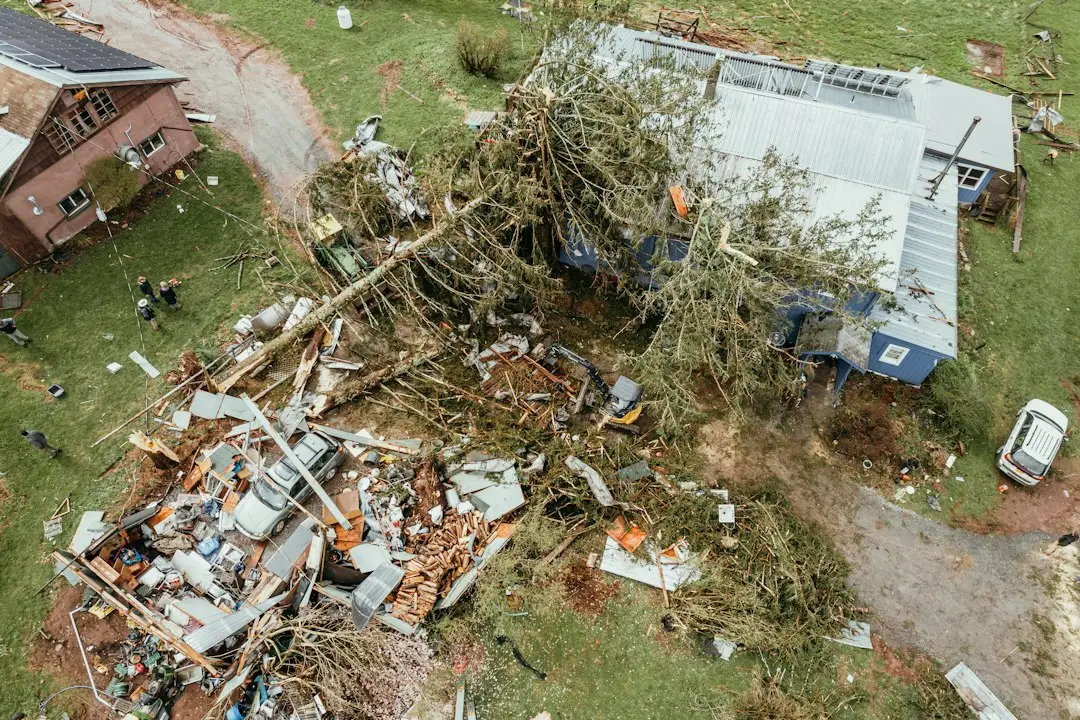
The 50% rule: why building value and land value must stay separate
Under the NFIP framework, substantial damage generally means the cost to restore a structure to its pre-damage condition equals or exceeds 50% of its market value before the damage. The comparison concerns the structure, excluding land. Damage can arise from causes other than flooding. Local officials administer the determination and applicable floodplain requirements; local rules can be more restrictive.
Illustration only: If the accepted pre-damage building value is $300,000 and the qualifying restoration cost is $160,000, the ratio is about 53%. Adding $200,000 of land and dividing by $500,000 would produce 32%, but it would use the wrong denominator for this building-only comparison.
The local official determines the accepted values, included costs, and requirements. This example is not a determination for any property.
For a Virginia Beach property, the city’s floodplain management guidance addresses work both above and below the 50% threshold. Being below 50% is not a blanket exemption from permits or flood-protection requirements. Contact the locality’s floodplain administrator or permit office before committing to a rebuilding plan.
If an official requests an appraisal, obtain the instructions first: required valuation date, building-only treatment, acceptable methods, and submission requirements. I would review those instructions and the assignment’s complexity before accepting the work. A routine whole-property appraisal may not supply the specific evidence the locality needs.
What if the damage happens during a purchase or refinance?
Notify your lender promptly, even if the appraisal visit already occurred. Fannie Mae’s disaster guidance makes the lender responsible for deciding whether an inspection, a new appraisal, or other information is necessary. For a condominium, the condition of the unit and the building both matter.
A follow-up inspection is not automatically a new opinion of market value. Ask what the lender is ordering and whether repair verification, a new value conclusion, or both are needed. Loan program and lender requirements govern the mortgage process; a privately ordered report is not an automatic substitute.
Can a disaster affect value if my house was not damaged?
It can, but I would not assume the direction or size of the effect. Access, nearby repairs, available competing homes, insurance considerations, and changes in buyer demand may matter. Some effects are temporary; others may persist. The analysis needs evidence from the relevant market and date.
I would also avoid treating every sale in an affected area as a distressed sale. Its condition, marketing, contract timing, and transaction terms need to be investigated individually. Disaster-area boundaries alone do not establish what happened to a particular home’s value.
Questions homeowners ask after property damage
Should I wait until repairs are complete?
That depends on your decision. An as-is sale may call for a damaged-condition value. A request concerning the property before the event needs historical evidence. A completed-repair question needs a defined repair scope. Discuss the purpose early, even if safe access must wait.
Will I get back every dollar spent on repairs?
There is no automatic dollar-for-dollar relationship. Some work restores existing utility; some adds an improvement; some addresses obligations a buyer already expects to be satisfied. I analyze the resulting property and the market evidence.
Can I sell the house before everything is repaired?
A damaged house can have market value and may attract buyers willing to complete work. Condition, access, financing, and legal requirements can affect the transaction. My as-is selling guide explains the broader decision.
How much does a post-disaster appraisal cost, and how long does it take?
I quote the actual scope after reviewing the property and purpose. Reconstructing a past condition, researching limited sales, or analyzing more than one scenario can add work. Safe access and missing reports can affect delivery. Confirm the fee, included value opinions, and timing before ordering.
What if my photographs or records were lost?
Tell me what remains. Earlier listing photos, contractor records, plans, public records, and reports held by other parties may help establish the earlier condition. Their reliability and dates matter, and missing evidence can limit what the appraisal can credibly conclude.
Discuss the property and the report you actually need
Contact me with the address, event date, current repair status, intended use, and any written instructions from the lender, attorney, insurer, or local official. I will review the proposed residential assignment, the available evidence, and my credential scope before accepting it.