
Price per square foot is a home’s sale price divided by its living area. It spreads the price of the entire property across those square feet. That calculation alone cannot establish your home’s value or the value of additional living space.
By Joseph T. Ellington Jr., Virginia Licensed Residential Appraiser · Capital Valuations
I run into this confusion a lot: homeowners assume that a home’s overall price per square foot is the same as the value of an additional square foot of living area. They are two different numbers. Here is how to calculate the first—and why using it to price another house can lead you in the wrong direction.
How to calculate price per square foot
Divide the sale price by the home’s reported living area. For the examples below, living area means finished above-grade living area, commonly called gross living area or GLA.
If you use an asking price instead, you are calculating the seller’s asking price per square foot. That is different evidence from what a buyer actually paid. Also check what the area figure includes before comparing it with another home.
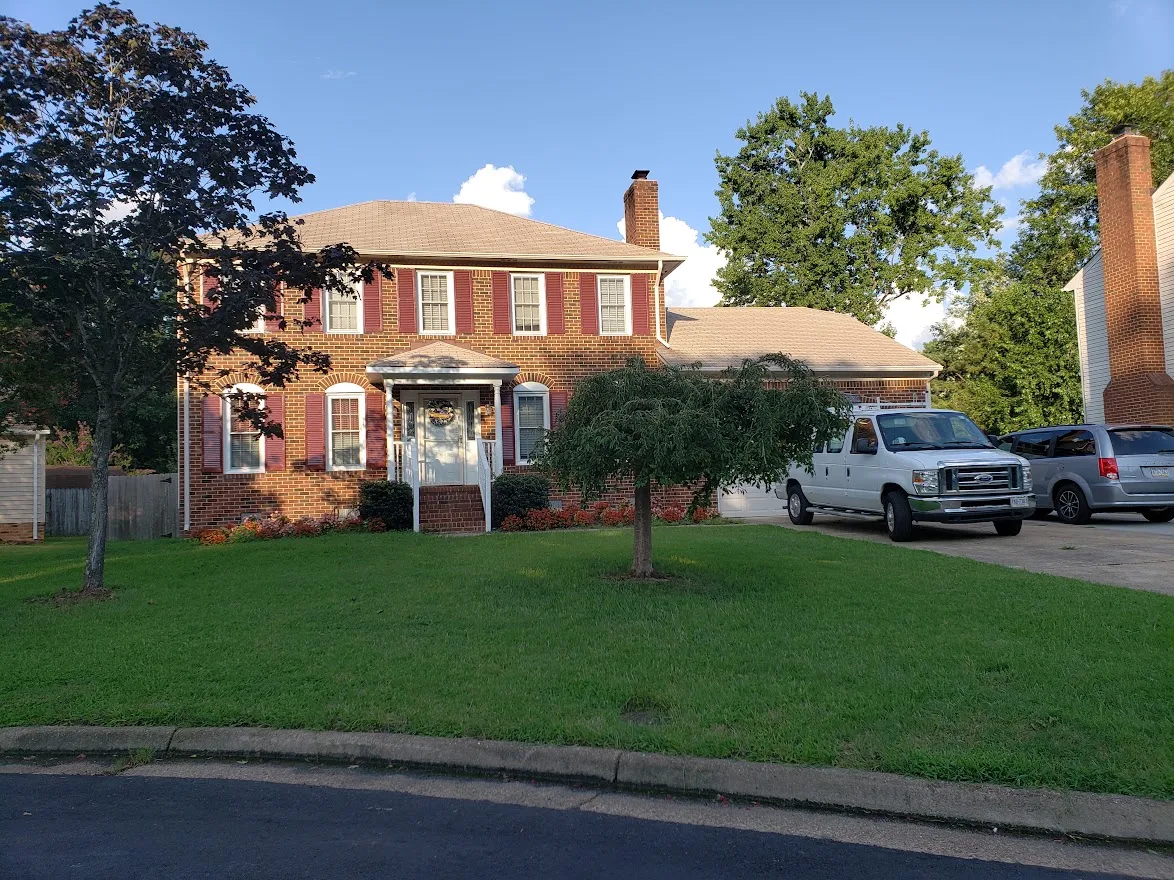
What is included in a home’s price per square foot?
When I explain this to a homeowner, I start with the numerator: the sale price. The buyer paid for the entire property. That price reflects the lot, location, house, bathrooms, kitchen, garage, overall condition, quality of construction and upgrades.
Dividing that total by the living area does not remove those other influences. The garage may contribute to the sale price even though its area is not included in the living-area figure used for the calculation. The same distinction applies to other features that affect the property’s appeal.
That is why I would not treat a $250-per-square-foot sale as evidence that every additional square foot of living area is worth $250. The arithmetic has not isolated the value of living area.
A two-home example: $250 per square foot versus a $100 GLA adjustment
Consider two hypothetical Virginia Beach homes. All prices, sizes and rates in these examples are illustrative. For this first comparison, assume the homes are otherwise comparable and the entire price difference is attributable to their difference in living area.
| Measure | Home A | Home B |
|---|---|---|
| Sale price | $500,000 | $520,000 |
| Above-grade living area | 2,000 sq ft | 2,200 sq ft |
| Overall price per square foot | $250.00 | $236.36 |
Home B has 200 additional square feet and sold for $20,000 more. Under those assumptions, the indicated contribution of the extra living area is:
The additional 200 square feet did not come with another lot, another garage or another kitchen. Those features were already represented in both sale prices. That is the distinction I want homeowners to understand.
A GLA adjustment is intended to reflect the market’s reaction to a difference in finished above-grade living area between comparable homes. In actual appraisal work, other differences have to be investigated before attributing a price difference to size. Fannie Mae’s guidance calls for market-supported adjustments rather than a fixed rule of thumb. [1]
My separate guide to how appraisers develop square-footage adjustments explains the appraisal-report side in more detail.
What happens if you use the neighbor’s price per square foot?
Apply Home A’s $250-per-square-foot figure to Home B’s 2,200 square feet and you get $550,000. But Home B’s sale price in this example is $520,000. The shortcut overshoots by $30,000.
The division was correct. The mistake was assuming that the resulting ratio could be transferred unchanged to a larger house. A seller can make the same mistake by taking a neighborhood average and multiplying it by the size of their own home.
Why can a smaller home sell for more per square foot?
A 1,500-square-foot home selling for $300 per square foot has a total price of $450,000. A 3,000-square-foot home selling for $225 per square foot has a total price of $675,000. The larger home has the higher total price despite the lower price per square foot.
The higher ratio does not, by itself, make the smaller house better. One reason smaller homes can show a higher overall price per square foot is that the value of the site and other property components is spread across fewer square feet. Doubling living area does not automatically double every other part of the property.
I would still need to examine the actual homes. Their overall condition, construction quality, location and features could also help explain the difference.
Can a ZIP-code or neighborhood average tell you your home’s value?
An average compresses a group of properties into one number. Before applying it to your house, you would need to know which homes were included, whether the figures came from sales or listings, the time period, and how living area was reported.
A mix of small renovated homes and large dated homes can produce a ratio that describes neither property well. An area discrepancy can distort the calculation too. Finished basement space, a garage and above-grade living area should not simply be treated as interchangeable; appraisal reporting distinguishes these categories. [2]
For a question about your home’s reported size, our home measuring service addresses measurements and the sketch. Measuring a house and determining its market value are separate tasks.
How I approach the value question
I do not use price per square foot as a general market comparison in my appraisal work. I look at comparable properties and the market evidence behind their differences. A home’s overall sale-price ratio does not tell me what adjustment to make for additional living area.
If you are preparing to sell, the useful question is what comparable buyers paid for homes that compete with yours, after considering meaningful differences. My pre-listing home appraisal service is designed to help with that value decision.
For a home in Virginia Beach or elsewhere in Hampton Roads, contact Capital Valuations with the address and your reason for needing an appraisal.
About the author: I’m Joseph T. Ellington Jr., Virginia Licensed Residential Appraiser and owner of Capital Valuations. I have 20+ years of appraisal experience. Read about my experience and qualifications.
Sources
- Fannie Mae Selling Guide, B4-1.3-09: Adjustments to Comparable Sales — market reaction and support for adjustments.
- Fannie Mae Selling Guide, B4-1.3-05: Improvements Section of the Appraisal Report — above-grade and below-grade area reporting.