
You have updated the kitchen, renovated a bathroom, or added space to your home, and you want to know whether the work could help you remove private mortgage insurance. Before ordering an appraisal, contact the company servicing your mortgage. Ask whether a current-value review based on improvements is available for your loan and how the valuation must be ordered.
That first call can prevent you from purchasing a report your servicer cannot use. It also tells you what decision an appraisal would support. Eligibility for PMI cancellation and a home's market value are connected questions, but the servicer's requirements and the appraiser's valuation work are different responsibilities.
I am Joseph T. Ellington Jr., a Licensed Residential Appraiser with Capital Valuations. For homeowners in Virginia Beach and Hampton Roads, the property’s specific market and condition remain important even after a renovation. This guide explains how to organize improvement information, distinguish renovation costs from value contribution, and prepare for the valuation process your servicer actually requires. It focuses on the records behind an improvement-based request; my existing guide to removing PMI with a home appraisal covers the broader topic.
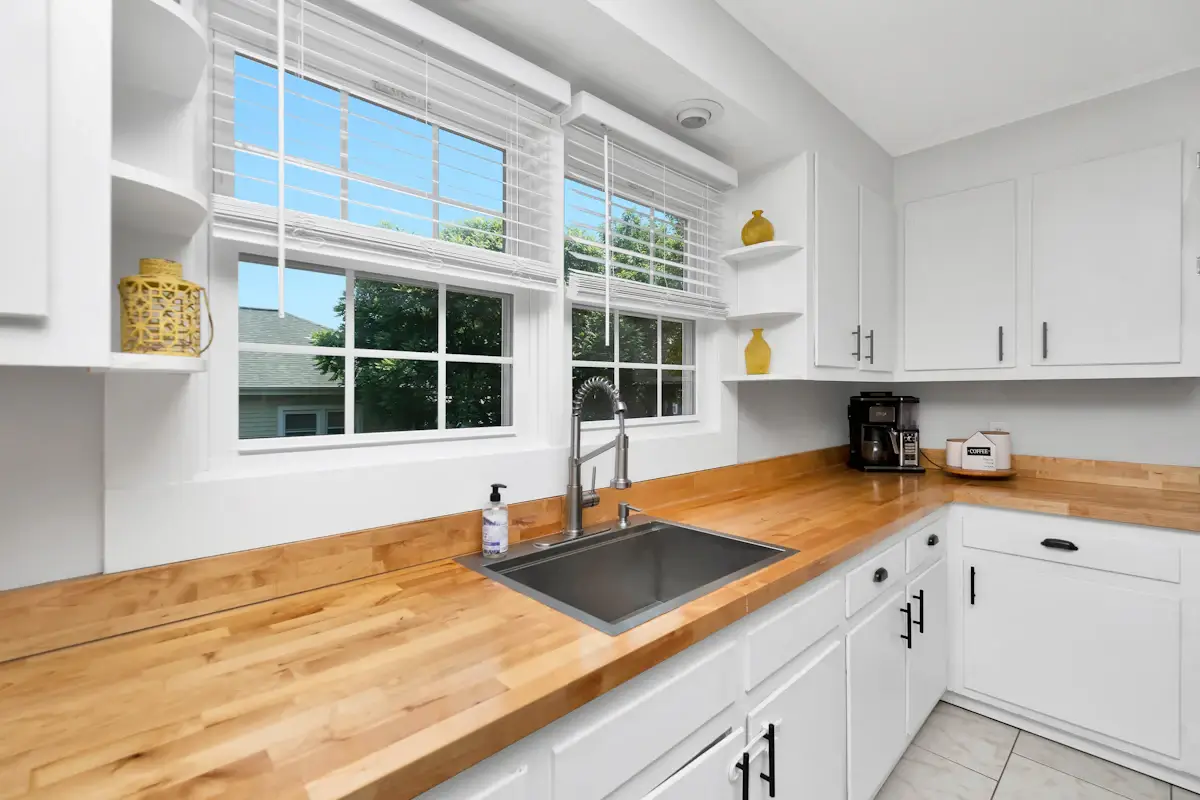
Ask the servicer about your loan before spending money
There is no single improvement-based cancellation procedure that applies to every mortgage. The type of loan, applicable investor requirements, payment history, timing, and valuation process can matter. A report obtained privately is not automatically acceptable because its author is an appraiser.
Ask your servicer these questions:
- Does my loan have borrower-paid private mortgage insurance, or a different type of mortgage insurance?
- Can I request cancellation using the property's current value?
- Is there a separate process for substantial improvements?
- What timing and payment-history requirements apply?
- What information about the improvements must I submit?
- Who orders the valuation, and what type of valuation is required?
- What fees apply, and what happens if the request is not approved?
Ask for the instructions in writing and keep the response with your property records. Explain that you are seeking the procedure for your particular loan, rather than relying on a percentage you found in a general online article.
The Consumer Financial Protection Bureau describes PMI cancellation and automatic termination, including rules based on original value. Those rules should not be confused with a separate request based on today's value after renovations.
Fannie Mae's current conventional mortgage-insurance guidance includes a current-value route with loan-specific conditions and provisions for improvements. It distinguishes qualifying improvements from repairs that merely keep a property functional. That guidance is relevant when it applies to your mortgage; it is not a universal promise that every renovation removes PMI.
Build an improvement list that explains what changed

An appraiser needs to understand the property's actual characteristics. A receipt saying “home renovation” does not establish which rooms changed, whether the work is complete, or how the home compares with competing properties.
I suggest a simple list with one row for each project:
| Information | What to record |
|---|---|
| Project | A specific description, such as replacing kitchen cabinets and counters |
| Location | The room or part of the property affected |
| Completion | The month and year the work was completed; identify unfinished work |
| Scope | What was replaced, added, removed, or reconfigured |
| Documentation | Available invoices, plans, permits, approvals, warranties, or photographs |
| Cost | The documented expenditure, clearly identified as cost rather than added value |
| Questions | Any discrepancy, missing record, or issue you want to explain |
Keep the descriptions factual. “Renovated upstairs bathroom with new fixtures and tile” is more informative than “luxury bathroom worth an extra $30,000.” The first describes the work. The second assumes a market conclusion that still needs evidence.
If you performed some work yourself, say so. Explain the project and provide the records you have. Do not invent contractor invoices or completion documentation. If you do not know whether an older change was permitted, identify that uncertainty instead of answering from memory as though it were verified.
Separate improvements from maintenance
Homeowners reasonably want credit for money spent on their properties. But spending money can solve different problems, and the valuation should distinguish those purposes.
A project may add a feature or substantially change the property's utility. Another project may restore something that was worn out or defective. Both can matter to the property's condition and marketability, but they do not necessarily receive the same treatment under your loan's PMI policy.
For example, a kitchen renovation changes a set of features a buyer can compare with other homes. Repairing a leaking pipe restores function. Replacing a worn roof may affect condition and buyers' expectations, but you should not assume it qualifies as a substantial improvement for your servicer's cancellation process. Ask the servicer how it classifies the work.
For the appraisal itself, describe all relevant work accurately, even if the servicer places projects into different eligibility categories. The appraiser should understand what exists at the property. The servicer decides how the applicable cancellation rules are satisfied.
My article on home renovations and appraisal value offers more detail about the distinction between a project's cost and its contribution to market value. That is useful whether your immediate goal is PMI removal, refinancing, or a future sale.
Why the renovation bill is not the value increase
An improvement's cost describes what you paid. Its contribution to market value concerns how buyers respond to the improved property compared with relevant alternatives. Those are not the same measurement.
A project's cost can include choices that reflect an owner's preferences, difficult installation conditions, or work needed to correct an existing problem. A buyer may value the finished result without reimbursing every dollar spent. Conversely, a functional change can affect market appeal in a way that cannot be evaluated simply by totaling invoices.
Consider an illustrative homeowner who spends $45,000 on renovations. It would be misleading to add $45,000 to an old appraisal automatically and describe the result as the home's current value. The property needs to be evaluated using appropriate evidence for the relevant date. This example is not a Capital Valuations assignment and does not suggest a typical return on renovation spending.
The same caution applies to online estimates. An automated estimate may not have a detailed record of the property's completed improvements. It may be a starting point for a question, but it does not replace the valuation process your servicer requires. My discussion of automated valuation models explains why property-specific information matters.
Document added space carefully
An addition, converted garage, finished attic, or enclosed porch deserves a clear explanation. The fact that an area is used as a bedroom or office does not by itself determine how it should be reported in an appraisal.
Gather plans, available permits and approvals, completion information, and any records explaining the space's construction. Identify whether it is above or below grade, connected to the rest of the home, heated, and finished consistently with the surrounding area. These are facts for the appraiser to evaluate; they are not instructions to count every area the same way.
If the public record differs from your understanding of the home, identify the discrepancy before the inspection. Do not assume a tax record is a measurement of the property's present condition, and do not silently replace it with an unverified number.
My article on measurement errors in real estate appraisals explains why area differences need attention. Clear records can help an appraiser investigate the question. They cannot guarantee a particular classification or value adjustment.
Use photographs to explain the work, not to replace inspection
Before-and-after photographs can help show what changed. Label the room, approximate date, and project, and avoid mixing photographs of unfinished work with photographs of the completed result.
Useful photographs show the overall space as well as relevant details. A close-up of one fixture is less informative than a room view that explains the property's layout and finished condition. If a photograph shows an earlier condition, make that clear.
Do not edit photographs to conceal defects or make the property look materially different. Do not use a contractor's stock image as though it shows your home. The goal is an accurate record that supports understanding of the work.
Photographs are one part of the packet. The valuation process may require an inspection, and the servicer may specify how that inspection is conducted. Follow the ordering instructions rather than assuming you can substitute photographs for a required visit.
Local market evidence still matters after the work is documented
A well-organized packet explains the house. It does not determine what comparable market evidence says about its value.
Two similarly priced projects can have different effects in different properties. Buyers may respond differently to a renovated kitchen in a home that otherwise meets local expectations than to the same kitchen in a house with unresolved condition or layout problems. Competing homes, site characteristics, and the overall property still need consideration.
For homes in York County or Williamsburg, the relevant comparison should reflect the property's actual competitive market. A city or county label is not enough to establish that a sale is comparable. Neither is a photograph of a similar-looking kitchen.
If you are trying to understand that part of the process, read how appraisers choose comparable sales. Improvement records and comparable evidence answer different questions, and a credible analysis brings them together.
What if you already have an appraisal?
Ask the servicer whether the existing report can be considered and what it would need to evaluate. Tell the servicer why the report was obtained, its effective date, and whether the improvements were completed at that time.
A previous purchase, refinance, or private appraisal is not automatically acceptable for a new PMI request. The party relying on the report and the purpose of the assignment matter. An old report may describe the property before the renovations or use an effective date that does not address the current question.
My guide to reusing a home appraisal explains those issues in more detail. If you also plan to sell, the comparison of pre-listing and lender appraisals can help you avoid assuming that one report serves every future decision.
Questions about improvements and PMI
Does a new kitchen guarantee PMI removal?
No. The work may be relevant to value and to an applicable improvement-based process, but cancellation depends on your loan's requirements and the accepted valuation. A project description or invoice alone cannot establish eligibility.
Should I order a private appraisal before contacting my servicer?
Contact the servicer first. Ask who must order the valuation and whether a privately commissioned report will be accepted. For more about that decision, see my article on appraisal cost considerations for PMI removal.
Can regular maintenance help the property's appraisal?
Condition matters to buyers and to the analysis of a property. However, a project's relevance to value and its qualification under a substantial-improvement policy are separate questions. Document the work and let the servicer explain its policy.
What if I do not have every invoice?
Provide the records you have and identify what is missing. A factual description, available photographs, and completion information can help explain a project, but they do not replace a document the servicer specifically requires. Ask how missing records should be handled.
Can the appraiser calculate whether my PMI will be canceled?
The appraisal provides a value opinion within its defined assignment. Your servicer evaluates the loan and the applicable cancellation conditions. Do not treat a preliminary value discussion as a commitment from the servicer.
Define the assignment before ordering the report

Start with the written servicer instructions, then organize your improvement list and supporting records. If those instructions permit you to choose an appraiser, my PMI removal appraisal service is a place to learn more about the appraisal side of the process.
Contact Capital Valuations to discuss the property, completed improvements, and the valuation requirements you received. I can help define an appropriate appraisal assignment; your servicer remains the source for whether and how your mortgage insurance can be canceled.