
Last updated
The quick answer
What is an automated valuation model (AVM)?
An automated valuation model (AVM) is software that estimates a property’s value using property records, sales data, and statistical or machine-learning methods. An AVM produces a model-based estimate; a home appraisal is an appraiser’s independent opinion of value developed for a specific property, purpose, and effective date.
The biggest difference is how the conclusion is developed and supported. An appraiser evaluates relevant evidence, resolves material data conflicts, and explains the analysis within the assignment’s scope. A standalone AVM does not provide that same appraisal service.
If one website says your house is worth $425,000, another says $460,000, and an appraisal reaches a different number, which one should you use? Start with the decision you need to make. Checking a rough equity estimate, setting an asking price, and documenting an inherited property’s value are different tasks.
This guide explains AVM accuracy, online home value estimates, appraisal alternatives, and the questions worth asking before relying on a number. It also covers property details that deserve particular attention in Virginia Beach and the surrounding Hampton Roads and Peninsula markets.
AVM vs. home appraisal: what is the difference?
An AVM calculates an estimate from the information available to its model. A home appraisal develops an opinion of value through an appraiser’s analysis of the property and market. Both depend on data quality. An appraisal adds assignment-specific investigation, professional judgment, and an explanation of the evidence supporting the conclusion.
| Question | AVM estimate | Home appraisal |
|---|---|---|
| Who develops it? | Software applies a model to available data. | An appraiser develops and takes responsibility for the appraisal opinion. |
| Is there a property visit? | A standalone AVM does not include one. A broader valuation product may add property data collection. | Depends on scope: an interior/exterior inspection, exterior observation, desktop research, or third-party property data may be used. |
| How are condition and updates handled? | Only to the extent the model receives and interprets relevant information. | The appraiser evaluates available evidence of condition and improvements, subject to the inspection and research scope. |
| What do you receive? | Usually an estimated value; some products include a range, confidence measure, or supporting data. | A report communicating the value opinion, effective date, relevant analysis, and limitations. |
| How fast is it? | Often available within seconds once the necessary data is available. | Timing depends on access, complexity, research, and the agreed scope. |
| What does it cost? | Many consumer estimates are free. Commercial and lender products may have fees. | A professional assignment fee; Capital Valuations appraisals start at $400, subject to scope. |
| Will a lender accept it? | Only if that lender’s program permits the specific valuation method. | The lender’s ordering, appraiser-selection, and report requirements still apply. |
| Does it guarantee a sale price? | No. | No. An appraisal is an opinion of value as of a stated date. |
An appraisal is also different from a home inspection. Even when an appraiser visits the property, the visit is not an engineering evaluation or a guarantee that hidden defects will be found.
How does an automated valuation model work?
An AVM looks for relationships between property characteristics and market evidence, then uses those relationships to estimate a property’s value. Models vary: some emphasize comparable transactions, others use statistical regression, repeat-sales patterns, machine learning, or a combination of methods. There is no single formula used by every provider.
Depending on access and coverage, inputs can include recorded sales, assessor records, parcel information, property size and age, location, listing data, and market trends. ATTOM’s explanation of AVMs describes how automated property valuation draws on real estate data. A provider’s specific model and data sources matter more than the label alone.
- Identify the property. Match the address and parcel to the correct home or condominium unit.
- Assemble available information. Gather property characteristics and relevant market records.
- Apply the model. Estimate how those characteristics relate to observed prices.
- Report the result. Produce a value estimate and, where available, a range or confidence indication.
Data gaps can enter at any step. A garage conversion may still appear as a garage. A sale may involve more than one parcel. A property record may describe the home before a substantial renovation. Processing that information faster does not resolve the underlying question.

How accurate are automated valuation models?
AVM accuracy varies by provider, property, market, data quality, and valuation date. A published national error rate does not tell you how close an estimate is for your particular home. Look at both the provider’s performance statistics and the reliability of the information describing your property.
What does a median error rate actually mean?
A median absolute percentage error divides a tested group in half: half the estimates have a smaller percentage error, and half have a larger one. It is not a maximum error, a guarantee, or a confidence interval for one address.
On October 12, 2026, Zillow’s home value estimator page reported nationwide median error rates of 1.83% for on-market homes and 7.01% for off-market homes. Those figures describe Zillow’s reported performance, not every AVM, and can change. They should not be presented as a head-to-head accuracy test against professional appraisals.
What a percentage means in dollars
On a hypothetical $400,000 sale, a 2% difference is $8,000, a 5% difference is $20,000, and a 7% difference is $28,000. These are arithmetic examples, not predicted errors for your house. A difference that seems small in percentage terms can matter when setting a price or dividing an estate.
Why on-market and off-market accuracy differ
A listed home can supply additional information, including a current asking price and listing details. Zillow explains that new listing information can change its estimate. An estimate produced after a home is listed therefore should not be treated as if it were a completely independent prediction made before the seller chose a price. See Zillow’s methodology and FAQs.
What is an AVM confidence score or forecast standard deviation?
A confidence score expresses the model provider’s assessment of uncertainty for an estimate. Its scale and meaning depend on the provider. A score of 90 does not automatically mean a 90% probability that the value is correct.
Some products report a forecast standard deviation (FSD), a statistical measure of expected proportional error. A lower properly validated FSD generally indicates less expected uncertainty. Freddie Mac’s technical explanation of AVM confidence measures emphasizes validating those measures against actual outcomes. That older paper explains the statistical concept; its historical product thresholds should not be mistaken for current lending policy.
Ask what a displayed range means, how it was tested, and whether it is specific to your property. A narrow range is not proof that the underlying square footage or condition record is correct.

Which homes deserve closer review?
Pay particular attention to properties with limited comparable sales, substantial renovations, unusual floor plans, mixed uses, accessory living areas, waterfront influences, or conflicting records. These features do not make an AVM automatically wrong. They create questions that a headline estimate may not explain.
Appraisers face imperfect data too. The advantage of a properly scoped appraisal is the opportunity to investigate those questions, assess the evidence, and communicate the reasoning. No credible comparison should claim that every appraisal is accurate or every AVM is inaccurate.
Why are Zillow, Redfin, and an appraisal different?
Different home value estimates can result from different property facts, data sources, models, comparable sales, and effective dates. An appraisal may also reflect property-specific information that an online estimate has not captured adequately.
Zillow describes its Zestimate as an automated estimate rather than an appraisal. Redfin likewise says its estimate is a starting point, not an appraisal. Neither number is a promise of what a buyer will pay.
Before choosing the highest number, compare what each source actually assumes. Are they valuing the same parcel? Is the home listed or off-market? Does the living area include a finished room over the garage? Has one provider incorporated a recent sale that another has not?
Averaging several estimates is not a substitute for resolving those differences. If three models share an incorrect property record, three similar answers may reflect the same error. Likewise, an appraisal below an online estimate is not, by itself, evidence that the appraiser missed value.
AVM vs. CMA vs. tax assessment
| Value source | What it generally represents | What to check |
|---|---|---|
| AVM | An automated estimate based on the provider’s data and model. | Property facts, estimate date, uncertainty, and permitted use. |
| CMA | An agent’s comparative market analysis, often used to help develop a listing or offer strategy. | Selected comparables, property review, and assumptions. |
| Tax assessment | A value established for property taxation under the jurisdiction’s assessment process. | Assessment date, property record, and local assessment rules. |
| Appraisal | An appraiser’s opinion for an identified intended use and effective date. | Scope, intended users, comparable evidence, and explanation. |
For the agent-versus-appraiser distinction, read our CMA vs. appraisal guide. An asking price is another number altogether: it is the seller’s offer to the market, not proof of market value.
Is an AVM the same as a desktop appraisal or appraisal waiver?
No. A desktop appraisal and a hybrid appraisal are appraisals performed by an appraiser. An AVM is a model. An appraisal waiver is a lending decision allowing a transaction to proceed without an appraisal under specified requirements.
- Desktop appraisal: the appraiser develops the opinion using appropriate information without personally inspecting the property for that assignment. Fannie Mae’s desktop appraisal guidance describes the applicable scope for its program.
- Hybrid appraisal: an appraiser uses property information collected through a separate data-collection process. The data collector and the appraiser developing the value opinion may be different people. See Fannie Mae’s hybrid appraisal requirements.
- Drive-by or exterior appraisal: an appraisal with a limited observation scope, often involving exterior observation. It is not simply a computer estimate.
- Appraisal waiver/value acceptance: an eligible lender casefile proceeds without an appraisal under the relevant program. It does not turn an online estimate into an appraisal report.
Also distinguish value acceptance + property data from a hybrid appraisal: collecting property data does not, by itself, mean an appraiser developed a value opinion. Our desktop appraisal guide explains what the scope can and cannot answer.
Can lenders use an AVM instead of an appraisal?
Sometimes. The lender, loan program, investor requirements, property, and transaction determine the acceptable valuation method. A homeowner cannot replace a required lender-ordered appraisal by submitting a preferred website estimate.
Fannie Mae’s value acceptance program can accept a lender-submitted value without an appraisal for eligible casefiles. Its Selling Guide also specifies circumstances in which a lender must obtain an appraisal, including when additional property information warrants one. An offer of value acceptance is not a guarantee that a contract price is right for the buyer.
What about a HELOC or home equity loan?
Some home-equity programs use automated valuation as part of their collateral review; others require additional evidence or an appraisal. Ask the lender which method it uses, what happens if the model cannot produce an acceptable result, and whether a review or alternative valuation is available. “No appraisal” marketing does not mean the lender ignores the property’s value.
The practical impact can be substantial. If a hypothetical lender permits 80% combined loan-to-value, a $400,000 accepted value implies a $320,000 total secured-debt ceiling. With a $250,000 existing balance, the simple difference is $70,000 before other restrictions and fees. At a $375,000 accepted value, that difference falls to $50,000. These are illustrations only; they are not an approval estimate or a statement of any lender’s terms.
Can I use an AVM to remove PMI?
Ask your mortgage servicer what valuation and eligibility requirements apply before paying for anything. An online estimate showing additional equity does not establish that PMI cancellation has been approved. If a valuation is required, the servicer may control how it is ordered. Our PMI removal appraisal page explains why that first call matters.
The same ordering caution applies to mortgages generally: a privately commissioned appraisal is not automatically acceptable to your lender. Confirm the intended use and ordering requirements before engaging an appraiser.
When is a private appraisal worth considering?
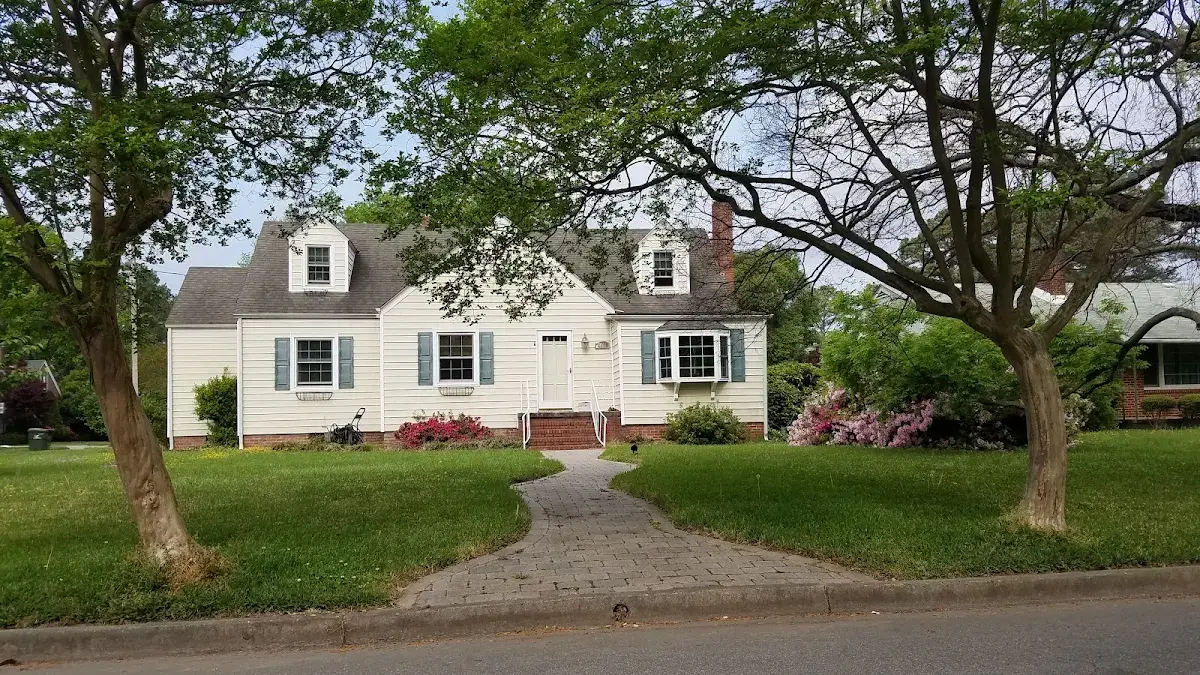
A private appraisal is useful when you need an independent, documented opinion that addresses your actual decision. The question is how much investigation and explanation the situation requires.
Before listing a home or selling FSBO
Consider a pre-listing home appraisal when online estimates vary widely, your home has unusual features, or you want an independent opinion before committing to an asking price. An appraisal can inform pricing discussions without promising a particular sale price or the same result as a future buyer’s lender appraisal.
For an estate or inherited-property decision
A current online estimate answers a different question from a value opinion as of a past date. An estate or date-of-death appraisal can address the specified effective date and historical evidence. An online value-history chart should not be treated as a retrospective appraisal report. Confirm the required date and purpose with the attorney, executor, or tax adviser involved.
After substantial improvements or when records conflict
An addition, garage conversion, remodeled interior, or change in usable space may create a mismatch between public records and the property as it exists. An appraisal investigates the relevant facts within its scope and considers market support for their contribution. Spending $50,000 does not automatically add $50,000 in value.
For area discrepancies, start with the measurement basis. Above-grade living area, below-grade space, unfinished space, and other finished areas are not interchangeable. Our home measurement error checklist explains common conflicts.
Local details in Virginia Beach and Hampton Roads
These are examples of questions that can deserve individual investigation, not claims that every model misses them:
- Waterfront and water views: What rights, access, frontage, view, and physical limitations actually exist? Nearby homes may offer very different utility.
- Finished rooms over garages: Does the reported area reflect the room’s configuration and applicable measurement requirements, including sloped ceilings?
- Condominiums: Are the comparisons from the relevant project and similar in unit position, view, condition, and other market-supported influences?
- Older homes and conversions: Do records reflect current layout and use, or a previous configuration?
- Location influences: Have flood-related factors, traffic exposure, access, and other relevant site differences been investigated?
An appraiser’s job is to determine whether the evidence supports a value effect and explain it. A feature should not receive an adjustment simply because it sounds desirable or undesirable. Our guide to finding and verifying comparable sales explains why the closest sale is not always the best comparable.

What should you do if an AVM value looks wrong?
Check the property facts, valuation date, and supporting evidence before arguing about the number. A specific discrepancy is more useful than a screenshot of a higher estimate.
- Confirm the property identity. Verify the address, parcel, unit number, property type, and any additional parcels.
- Compare the dates. Today’s estimate and an appraisal from six months ago may reflect different markets or property conditions.
- Check the living area and layout. Identify differences in square footage, room counts, additions, and treatment of finished or unfinished areas.
- Document condition and improvements. Gather dated photos, permits where relevant, descriptions, and completion dates. Separate what you know from what you assume.
- Review sales evidence. Look for similar properties and verify relevant sale dates, characteristics, and transaction circumstances.
- Ask about uncertainty. Request the model’s range or confidence information if it is available, and ask what that measure means.
- Use the appropriate correction process. Contact the website for its property record, the assessor for its record, or the lender for its valuation review procedure.
Correcting one database may not immediately update another. Keep copies of the evidence you supplied and check whether the correction actually appeared. A corrected record also does not guarantee a higher estimate.
If the disputed result is a lender-ordered appraisal, follow the lender’s reconsideration of value process. Identify factual errors or relevant omitted evidence. An AVM disagreement alone does not establish that the appraisal conclusion is unsupported.
What do the federal AVM quality-control rules require?
The interagency AVM final rule took effect October 1, 2025. For covered uses involving certain mortgage credit decisions and securitization determinations, institutions must maintain controls addressing confidence in estimates, data manipulation, conflicts of interest, sample testing and reviews, and compliance with applicable nondiscrimination laws.
The CFPB’s final-rule summary explains its scope; the published final rule provides the effective date and details. This is not a federal accuracy guarantee for every consumer home-value website. It also does not make an AVM equivalent to an appraisal.
Automation does not eliminate the need to examine data quality, potential bias, and performance. Those responsibilities matter whether a valuation process uses a model, an appraiser, or both.
Frequently asked questions about AVMs and appraisals
What does AVM stand for in real estate?
AVM stands for automated valuation model: a computer model that estimates property value from available real estate data. The term describes the method, not a guarantee of accuracy or acceptance for a particular transaction.
Can I get an automated valuation model for free?
Many consumer websites offer free home value estimates. A free estimate can help you begin researching your property, but it is not the same product as a lender’s collateral valuation or an independent appraisal. Check whether the site is providing an estimate, collecting an inquiry, or offering a paid report.
Is an AVM calculator just price per square foot?
No. AVMs can use many variables and relationships. Multiplying your home’s size by a neighborhood’s average price per square foot is a rough calculation that may overlook condition, lot differences, property type, and other influences. Neither that shortcut nor its precision on a calculator makes it an appraisal.
Is a Zestimate an appraisal?
No. It is an automated home value estimate. Zillow states that it is not an appraisal. Use the estimate with an understanding of its data and limitations; confirm the required valuation product for your particular decision.
Does an AVM account for renovations?
It may, if relevant information reaches the model and the model accounts for it. Do not assume a new kitchen or addition is reflected accurately. Even when an improvement is recognized, its cost and its market contribution can differ.
Can an appraisal come in below an AVM estimate?
Yes. It can be lower, higher, or similar. The appraiser’s responsibility is to develop an independent opinion supported by evidence, not to reach an online estimate, contract price, or owner’s preferred number.
What does it mean if an AVM returns no value?
The model may lack sufficient usable information or may not meet the provider’s confidence or coverage requirements. No estimate is not proof the home has low value. Ask the provider or lender what prevented a result and what alternative valuation process is available.
Can I request an appraisal if my lender uses an AVM?
Ask the lender about its review and appraisal options before ordering independently. Availability, fees, timing, and acceptance depend on the program. A private appraisal you obtain yourself does not automatically replace the lender’s chosen valuation.
Will AI replace real estate appraisers?
AI can assist with data analysis and valuation workflows, and some transactions qualify for appraisal alternatives. That does not mean every valuation question can be answered by an automated estimate. Appraisers remain responsible for the opinions they develop, including their use of tools and supporting information.
How much does an independent home appraisal cost?
Capital Valuations residential appraisals start at $400, subject to scope. Property characteristics, location, intended use, effective date, and research requirements affect the quote. See our home appraisal cost guide or provide your property address and purpose for an assignment-specific quote.
Need an independent opinion of your home’s value?
Capital Valuations provides private residential appraisals for pre-listing, FSBO, estate, date-of-death, and other defined valuation needs. Tell Joe what decision you are making, the property address, and the date the value needs to reflect.
Call 757-831-6234 · Appraisals starting at $400, subject to scope.
Serving Virginia Beach, Norfolk, Chesapeake, Portsmouth, Suffolk, Hampton, Newport News, Poquoson, York County, and Williamsburg. For a lender or servicer assignment, confirm its ordering requirements first.
About the author and sources
Joseph T. Ellington Jr. is a Virginia Licensed Residential Appraiser and owner of Capital Valuations, with more than 20 years of appraisal experience. This guide combines appraisal practice explanations with the original sources linked throughout the article. Local scenarios and dollar calculations are illustrative, not client case studies.
Sources reviewed for this October 12, 2026 revision include Zillow and Redfin’s methodology disclosures; Fannie Mae’s value acceptance, desktop, and hybrid guidance; the CFPB and FDIC’s AVM rule materials; ATTOM’s AVM overview; and Freddie Mac’s technical explanation of confidence measures. Lender policies and provider statistics can change, so consult the linked source for current details.